Translate

Wednesday, February 14, 2018

THE BENEFITS OF OUTDOOR PLAY FOR KIDS – FINLEE & ME

Benefits of Outdoor Play

Children today don’t seem to get the same kind of face time with Mother Nature that they once did even though outdoor play is so important. They are completely consumed with video games, movies, television, computers and even large amounts of homework keeping them tied to the indoors. It is interesting that in a world full of mobile devices and apps that children spend less time out and about. The concept of letting go of technology and enjoying what nature has to offer seems to be foreign to many. In fact, 98 percent of children ages 5 to 14 years in Australia spend an average of 22 hours over a 14 day period during school time, according to the Australian Bureau of Statistics (ABS).
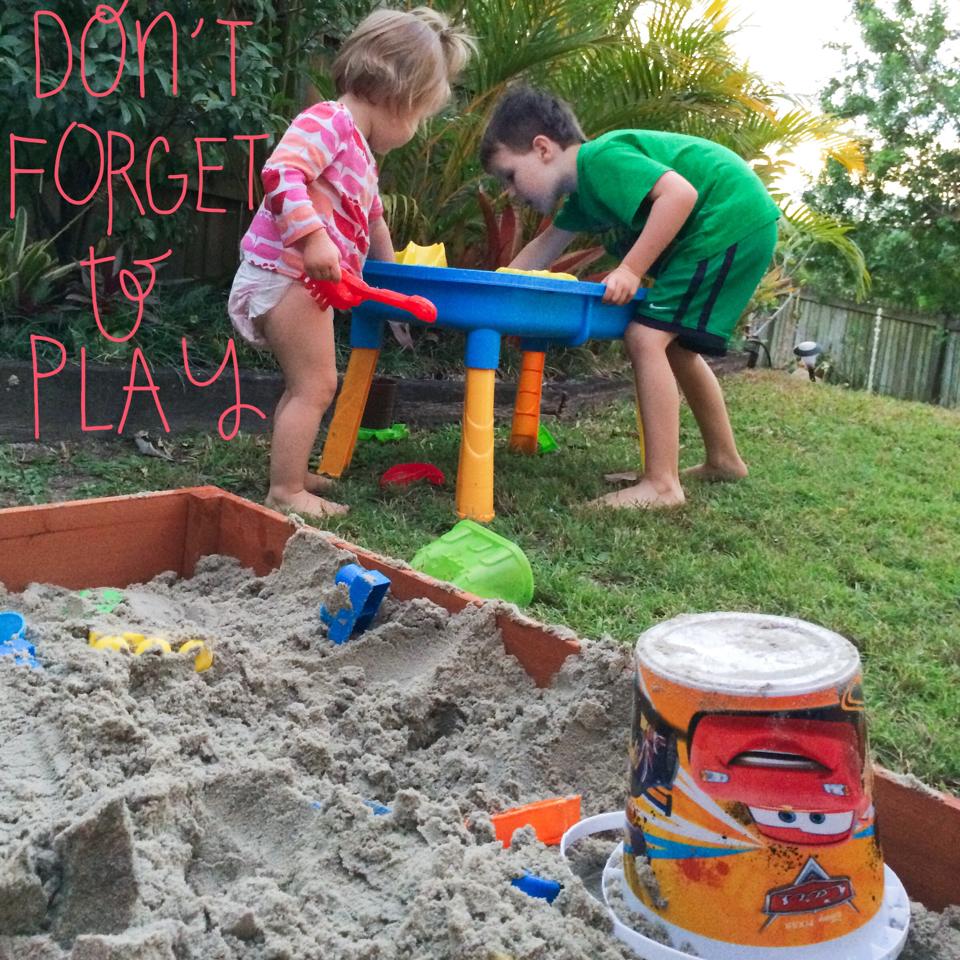
Outdoor Kids Play
There are many reasons that are attributed to the lack of outdoor kids play and nature in the lives of children including over scheduling of activities, unavailability of local natural areas to explore and even restrictions by parents for safety reasons. Perhaps the most obvious is a lack of the resources for children to actually play in safely. Buildings, traffic and technology have taken over much of the area that was once easily considered the back yard or many.here are many reasons that are attributed to the lack of outdoor kids play and nature in the lives of children including over scheduling of activities, unavailability of local natural areas to explore and even restrictions by parents for safety reasons. Perhaps the most obvious is a lack of the resources for children to actually play in safely. Buildings, traffic and technology have taken over much of the area that was once easily considered the back yard or many.

Good Health for Kids

One of the obvious benefits to kids playing outside is good health. If you are outside and playing in nature, climbing trees, running, and climbing hills you are going to be healthier than if you spend all of your time sitting behind a desk, on the couch or on your bed. The human body is not built to be at its best condition without exercise. Additionally, the fresh air that is provided by trees and the outdoors is excellent for good health.
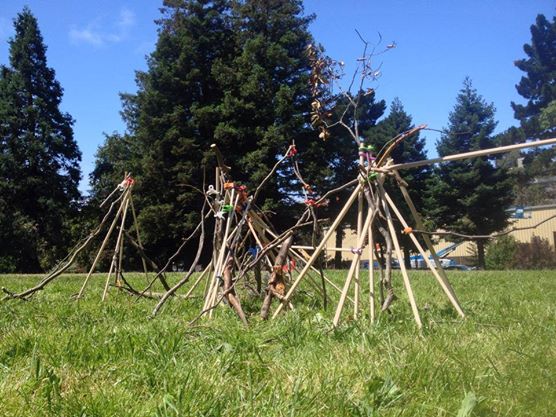
Kids Outdoor Play

Become Educated About Their Environment

It is interesting that the young adults of today are more interested in conserving nature than they once were and yet most of them obtain all of their information from television, at school or at conservatories. Another benefit of kids connecting with nature is that they learn about animals and the environment. This learning then becomes a healthy admiration, respect and caring. In a time when so much damage is done to the environment on a regular basis, it is essential that the next generation has a good respect for what is here. It is also important that the children are not afraid of animals and have empathy for them in both a wild and domestic setting. This can be challenging if they are not allowed to explore the animals and their habitats.

Promotes Problem Solving Skills

And finally, a great benefit of outside play is the fact that children learn problem solving, planning, team work, and individual thinking by being exposed to the natural world around them. This is how they grow into adults with the same skills and ability to be independent. While many things are taught in schools, there are some things that are better taught by nature itself and the experiences of being exposed and connected to nature.

Ideas for Outdoor Kids Play

There are several ways that parents can help bring their children closer to nature and allow them the outside play that is needed. One easy way is to make sure that you have a mandatory time off from the electronics each day. This could be just to take a walk around the block, play out in the back yard or if you are fortunate, a walk in the countryside. Parents can also designate one day a weekend as nature day and take the children away from the hustle and bustle of technology for a day or afternoon to a natural location. This might be a hike in the country, a visit to a local ranch, a day exploring tide pools at the beach instead of just sunning themselves. Little steps can make big impacts on the minds of children as they grow.
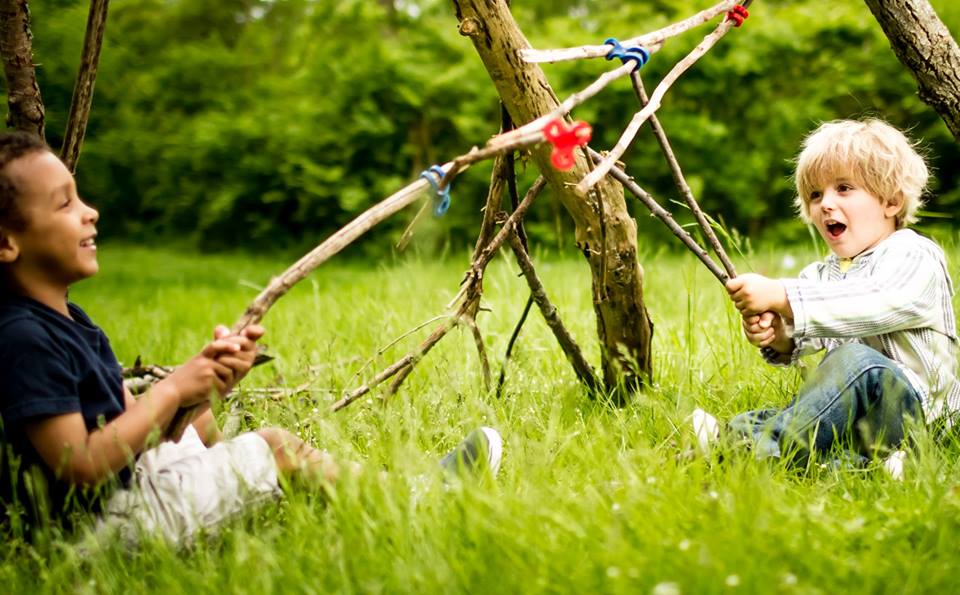
Kids Playing Outdoors

Kids

guidstone-kids-sized.jpg
A happy family is the most comfortable ground for children to grow up and become successful people. Parents look like gods in the eyes of their children.
"I’m a happy person because I had a chance to grow up in a wondrous family. I’m very grateful to my parents for filling my life with love and positivity. My family spent much time and efforts on my education and my physical wellbeing. They believed that constant and persistent development was the earnest of my future success. My dad was always afraid to spoil me, while giving me small gifts and making surprises. Now that I am all grown up, I realize that it’s normal to spoil children reasonably, because no one knows what life has in store for them in future."
Children, who have grown up in happy families, usually reach their goals with ease and have more chances to live their life to the fullest.
For this reason FIZIQUE has started a range of products especially for kids.
parachute.jpeg

10 ways to help children get their play back

10 ways to help children get their play back

Op-eds rail against our kids' over-scheduled lives, but they're not offering us any suggestions on how to create a social group for them

Even when parents agree that their kids need to play more, current lifestyles often prevent it from actually happening.There are many studies out there that say today’s kids are all work and no play, despite how essential free play is for children’s growth and well-being. Playing helps children learn self-direction, decision-making skills, self-control, rules, how to manage emotions and how to navigate social situations. Children who don’t play enough tend to lack joy and are sometimes aggressive.
But how do we get them this play? Even when parents agree that their kids need to play more, current lifestyles often prevent it from actually happening.
When we went house hunting in Milwaukee last fall, we felt good about our first choice because we saw toddler-size play sets and slides in back yards around the neighborhood. But I’ve since learned that most of the moms here work outside the home, and except for the afternoons and early evenings, there’s rarely anyone for my kids to play with.
No judgment on those families, who have since become our friends – their kids get to play at day care or in school, and I chose to work from home. But I want something that doesn’t seem to exist anymore: That 1950s style of play where kids had their own world, separate from adults. I’m thinking of the world portrayed in “The Sandlot,” “Now and Then” or “My Girl.” I’m not calling for a return to the kind of detached parenting that predated (and probably caused) the helicopter parent. But I do want that independent style of play back for my children. My older boy is lonely, and so is his mama.
After we had moved into our house, a friend told me about a Meetup group for stay-at-home moms. The group was in such high demand that I was on the waiting list for six months. Once I got in, I paid the annual dues and agreed to terms and conditions, including that we must attend at least one event a month and that we cannot be a no-show to an event we RSVP’d to. We are encouraged to host some of the get-togethers and to help with meals when moms in the group have babies. This group is serious, and I think it’s because there are other stay-at-home or work-at-home moms who want this kind of play for their children, too.
Op-eds rail against our kids’ over-scheduled lives, but they’re not offering us any suggestions on how to create a social group for them. One of the most surprising things I’ve learned about parenting is that making time to play takes hard work.
Does this sound familiar to you?
This summer, my kids and I have been taking breaks by playing card games. Simple card games like War, a card game for kids.
Do you know how to play War? It’s sometimes called Hi-Lo.
I love it because it is incredibly simple.  There’s no strategy or skill involved.
Besides learning number recognition and number values, kids can learn about winning and losing because they can’t do anything about it.

Classic War Card Game for Kids Pin It

How to Play War:

I’ve come up with a few alternate ways to play War with younger or older kids but first, here’s how to play the basic version:
  1. Deal the cards evenly between all players. If you have more than four people, you’ll want to use a double deck.
  2. Everyone has a stack of cards, face down. Each player flips their top card over into the center of the table.
  3. The highest card wins that hand (aces are high) and takes the cards played as their own. They can create a pile of cards for hands they won.
  4. When you run out of cards, you’re out of the game. Last player with cards wins.

Classic War Card Game for Kids Pin It

Right now, this basic version is perfect for my preschooler who has just grasped the concepts of counting and recognizing numbers up to 20.
The game takes his learning a step further since he needs to determine which card is greater than the other.
If he struggles, we count the diamonds (or clubs, etc) .
Then I ask, “Which number do you get to first? That number is less than the other.”

Classic War Card Game for Kids Pin It

In the event of a tie between the highest two players, you have a “duel.”
We play duels by laying down three cards, face down, and then flipping the fourth card up.
Highest card wins the whole lot of cards played!
Its always fun to see what you ended up giving away to the other person or get to keep for yourself!

What to do with a tie in a war card game for kidsPin It

Variations of War Card Game:

  • For younger kids, remove all J, Q, K and A and play with cards numbered 2 to 10 for number recognition
  • For older kids, use addition (or subtraction, or multiplication) by using two cards for each hand and then compare the sum.
  • To make the game last longer, only use one card face down during duels.
If you’re crazy about cards, you’ll also love these cool magic tricks to impress the kids (or they’ll impress you)!

Saturday, February 3, 2018

WHEN I WAS a kid

WHEN I WAS a kid, we played outside with the other kids in the neighborhood with most of our free time. We also made the most of recess at school. We kept ourselves quite occupied without any of today’s modern technologies. Listed below are some no-tech games that you may have enjoyed as a kid. I sure did. Some can be done indoors. Some can be done by yourself or with just one friend. But most of them are best when done outside with a group of people. Also, most of these games can be changed or improved by making up your own rules. Use your imagination!


Capture the Flag

This game is most fun when played with a large group. Split the group into two teams, each team having a flag or other marker at the team’s base. The object of the game is to run into the other team’s territory, capture their flag and make it safely back to your own territory. You can tag “enemy” players in your territory, sending them to your jail. They can be sprung from jail by a member of their own team running into your territory, tagging them and running back, with one freed person allowed per jail break. It is sometimes played that all the people in jail could hold hands and make a chain back toward their own territory, making it easier for members of their team to tag them. We also played a similar game called Steal the Sticks. It had almost the same rules, but several sticks were used instead of one flag.
Number of Players: A large group.
Equipment: Two flags or other markers.


Parachute

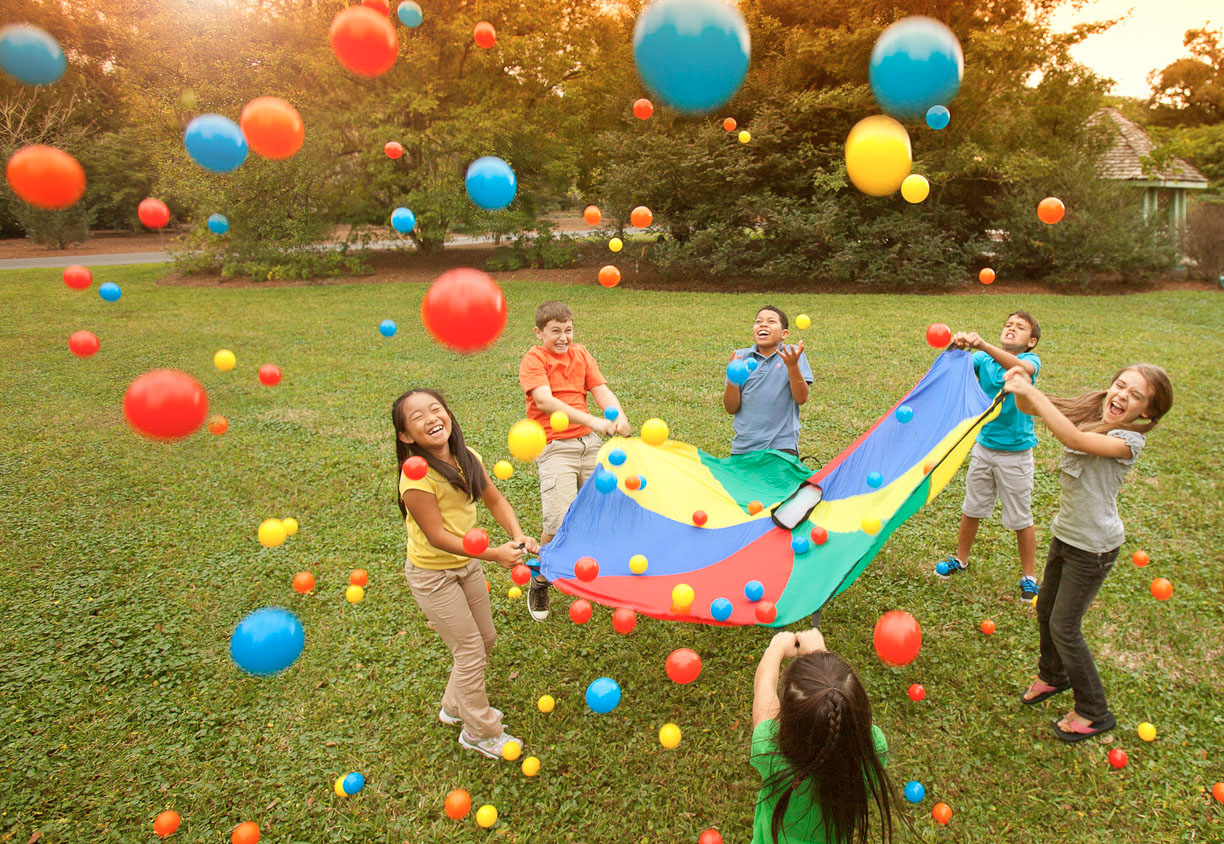
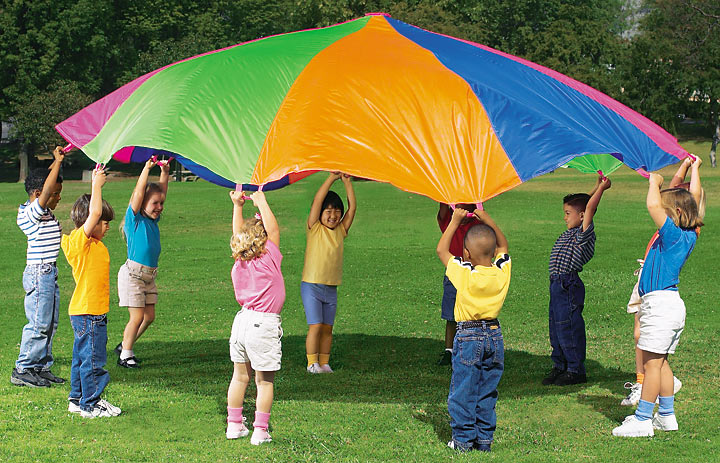
Fun for kids of all ages, this game involves a large round parachute, preferably with handles, with people holding the parachute all around the edges. It helps if someone is in charge telling people what to do. Players can just ruffle the parachute up and down a little bit, they can go all the way up and all the way down, or all the way up and then run underneath, sitting on the edge of the parachute, which can create a bubble of air with everyone inside. Players can also place light objects such as wiffle balls or beanbags on top of the parachute, and make them jump by ruffling the parachute. Also, one person can sit in the middle of the parachute and everyone ruffles it near the ground. If there is a smooth floor and a light child, the child can sit in the middle on top of the parachute and everyone else can walk partway around still holding the parachute edge. Then everyone pulls backward, spinning the child. There are countless variations.
Number of Players: Depends on the size of the parachute, but usually eight to ten.
Equipment: A play parachute. These aren’t as hard to find as you would think. Try here and here.

Traffic Cop

This game works best on a street with little to no traffic, or in a large paved area of some kind. You need bikes, wagons, pedestrians, scooters or whatever is available. One person directs traffic to make sure kids don’t run into each other. It is more fun than it sounds, and helps kids learn about waiting to cross the street and about traffic safety.
Number of Players: A small group.
Equipment: Bikes, wagons, scooters, anything on wheels.

Four Square

This ball game is played on a square court further divided into four smaller squares, numbered one through four. One player stands in each of the squares, with the highest ranked player in number one, lowest in number four. You bounce the ball among the players, bouncing once in the other person’s square before that person catches it. When I played this as a kid, we had countless additional rules to choose from. The person in square one got to choose the rules. Anyone who violates the rules will have to move down in the ranking, or be eliminated with another player rotating in to square four.
Number of Players: Four, unless you take turns.
Equipment: A four square court or sidewalk chalk, a playground ball.

Hopscotch

Use some sidewalk chalk and make a hopscotch grid. Number the squares from one to nine. Pick a rock that is good for tossing. Small ones can bounce too much, and larger ones are hard to throw. Start by tossing the rock onto Square 1. Hop over the rock and hop with a single foot or both feet (to follow the hopscotch pattern) all the way to the end. Turn around and come back, stopping on Square 2. Balancing on one foot, pick up the rock in Square 1 and hop over Square 1 to the start. Continue this pattern with Square 2. And so on. If you toss your rock and miss the correct square, your turn is over. This game can be played with any number of people, but only one person can go at a time. If it’s raining or dark or too cold, you can get indoor hopscotch mats or foam pieces, or just find a pattern on the floor to follow, perhaps using a beanbag instead of a rock.
Number of Players: One at a time.
Equipment: Hopscotch grid, rock or beabag.


kids games

kids games


Can Toss Game

This can toss games takes enough effort to find some branches and tie up some cans, let the games begin!


Outdoor Rock Climbing Wall

Let's face it, you can't keep a kid from climbing.  So let's support that by giving them a wall to do so.


Deck Game

Roll the dice, and create endless activities the kids can do outside.  Take it as far as your imagination lets you.


Giant Bubbles

Little bubbles are fun, but BIG bubblesare the best.  Kids will want to get them bigger and bigger until they pop!


Music Wall

The kids can create their own symphonywith a handful of kitchen items.


DIY Sandbox

This sandbox doesn't take a lot of time to put together, kids can help you do it and then it presents hours of outdoor fun.
Image result for kids games


Outdoor Word Game

Outdoor Word Game

This party game is F-U-N! Engage kids with this challenging outdoor spelling game.
1. For a 72-piece game set, purchase a 4x8-foot sheet of Masonite from a home improvement store. At the store, have it cut into 8-inch squares.
2. Apply a letter to each square -- you'll repeat the alphabet twice except for letters Q and X.
To play, each player gets 10 letters. The first player spells a word on the ground. The next player must build off that word. The player with the fewest letters at the end wins!